Is a Home Warranty a Good Idea?

You’ve seen the ads on tv for home warranties. They sound like a good idea. However, ifsmall house you’ve bought a home recently, you might have purchased or received a home warranty. However, consumers frequently expect more from these plans than they deliver. Refer Money Talk New March 20, 2018

Home warranties aren’t insurance policies. Instead, they are service contracts. Like a service contract that covers repairs to your computer, a home warranty is a company’s agreement to pay for fixing — and, if necessary, replacing — specified home components.

By comparison, a home insurance policy covers losses if your home and its contents are damaged or lost to theft, fire or other causes.

A basic home warranty costs about $350 to $500 a year or more. A warranty typically covers kitchen appliances, plumbing, water heater, heating and electrical system components, sump pump, whirlpool tub, and ceiling and exhaust fans, Angie’s List says.

“Enhanced” plans, purchased for another $100 to $300, provide added coverage for such things as a washer and dryer, air conditioning system, refrigerator and garage door opener. Optional coverage can be added, including for pools and septic systems.

You may be covered already

If someone gives you a home warranty, accept it — at least while it’s free. But understand that, even with someone else paying the premiums, you’ll likely pay a service fee — typically $50 or $75 — each time you need a repair, according to Angie’s List.

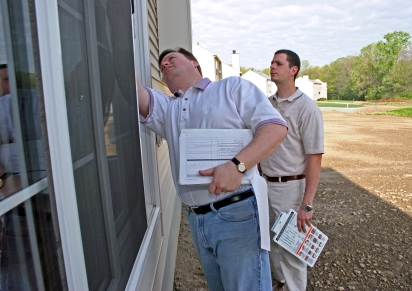
Before buying a home warranty, learn what coverage you may already have. For example, if you’re buying a newly built home, know that:
•The home appliances and systems typically have one-year warranties.
•Most states require builders to warranty the home’s structural elements for up to 10 years.

Also, when you buy new furnishings and appliances, use a credit card that extends the product’s warranty. That can add as much as an extra year of protection.

Is a home warranty right for you?

Sellers may offer a year of coverage as an incentive to home shoppers. Real estate agents sometimes give home warranties to clients as a thank you gift for purchasing a home. Some buyers of older homes find that a warranty gives them confidence.
Other homeowners decide they’re better off setting aside savings to cover home repairs and replacements.

One way to think about your needs: Compare the age of each covered item with its average life span. To do so, use the chart at the National Association of Certified Home Inspectors website.

With expensive components near or past their life expectancy, a home warranty might be a good idea. Components that have pre-existing problems, however, typically are excluded from protection.

Be sure to vet any company before purchasing a home warranty. Good resources include:
•Better Business Bureau
• Your state attorney general’s office: Find yours from the National Association of Attorneys General.
• Your state insurance commissioner: Locate yours with the National Association of Insurance Commissioners map. Although home warranties aren’t insurance policies, many states require companies offering warranties to register or be licensed by the state’s department of insurance.

Pros of home warranties

Buyers who purchase a previously owned home inherit used appliances and home systems with wear and tear. A home warranty can help cover the cost if things break down.

For example, if fire destroys your boiler, it might cost more than $10,000 to replace. A home warranty might cover at least a portion of the cost.

Cons of home warranties

However, for many homeowners, there is a wide gap between what the customer expects and what the plans deliver. Before buying a home warranty, read the contract and understand exactly what it does and does not cover. For example, some contracts will not provide coverage if:
•You didn’t maintain the appliance.
•The appliance was installed incorrectly.
•The appliance had too much wear and tear.

If you haven’t read the agreement carefully, be prepared for surprises. Don’t assume:
• Your policy will replace a faulty component. The warranty company might insist on repairing it instead.
• You can call your favorite service provider. Home warranties usually require you to use a contracted servicer.
• The warranty will cover the entire cost. In some cases, the warranty will cover just a fraction of the repair cost.

So, find out what’s covered and what the warranty provides. There may be exclusions and limitations. Perhaps the refrigerator is covered, but the ice maker is excluded. Claims might be rejected because of pre-existing problems or insufficient maintenance.

Learn who will perform the repair work. Also, find out if you can cancel the policy, and whether there is a period — such as 30 days — when you can get a “free look” at the program.

Ruth Schoenherr is a mortgage broker who will help you find home loans in the Clearwater, Palm Harbor, Largo, Safety Harbor, St Petersburg and Tampa Bay area. For more information, go to her web site at www.ClearwaterMortgageBroker.net

 

Mortgage Rates About the Same

You have head on the news about interest rates heading up. If you are looking for a house, small houseyou are probably wondering about mortgage rates. After hitting a four-month low, Mortgage rates took some baby steps up, however, they continued to hover around the same range they have been all summer, a report by Freddie Mac indicated.

The 30- year fixed- rate mortgage averaged 4.52 percent last week, a slight improvement from the previous week when it averaged 4.51 percent. The 30- year fixed- rate mortgage averaged 3.82 percent, the same week a year ago.

In a press release by Freddie Mac, Sam Khater, its chief economist said, “The 30- year fixed- rate mortgage barely inched up this week, continuing the summer trend of essentially being flat.”

He added, “While sales and price growth have softened these last few months, this leveling of rates may be helping more buyers reach the market. Purchase mortgage applications this week were once again modestly above year ago levels.”

Down 1 basis point from the previous week, the 15- year fixed- rate mortgage averaged 3.97 percent this last week. The same week a year ago, the 15- year fixed- rate mortgage averaged 3.12 percent.

At a 3.85 percent average, the five-year Treasury- indexed hybrid adjustable- rate mortgage underwent the most change, moving up 3 basis points. The same week a year ago, the five- year adjustable- rate mortgage averaged 3.14 percent.

“Mortgage rates drifted upwards over the past week as financial markets rallied on news that the United States and Mexico have agreed to the broad outlines of a new trade agreement,” Zillow’s senior economist, Aaron Terrazas said.

As Rates Slip, Weekly Mortgage Applications Decline

Potential homebuyers have been left frustrated this summer by weakening affordability, a factor affecting the entire mortgage market.

According to the mortgage Bankers Association’s seasonally adjusted report, total mortgage application volume declined 1.7 percent in the last week, and was 15 percent lower than a year ago.

The mortgage business should have been boosted be it by a small margin by a drop in mortgage rates, but unfortunately it wasn’t.

The market experienced a decrease in the average contract interest rate for 30-year fixed-rate mortgages with conforming loan balances ($453, 100 or less) from 4.81 percent to 4.78 percent, the lowest it has gotten since the week ending July 20, with points increasing from 0.42 to 0.46 (inclusive of the origination fee) for those loans whose down payment is 20 percent.

Ruth Schoenherr is a mortgage broker who will help you find home loans in the Clearwater, Palm Harbor, Largo, Safety Harbor, St Petersburg and Tampa Bay area. For more information, go to her web site at www.ClearwaterMortgageBroker.net


Checking Public Records

If you were going to hire an employee, you would probably do a background check. Sohouse cash maybe you should do the same thing when you get interested in a house. Of course, if you buy the house, the title company will protect you from any problems when you close. But perhaps you want to head off any problems by doing the research early.

What Records To Look For

When researching a home, it is highly recommended to research the following public records:
•Tax liens
•Warranty deeds
•Property tax records
•Foreclosures
•Date the home was built
•Past home prices

You can also determine if work was done on the property without a permit that could affect the square footage, price, and other details of the home. It is also recommended to research the neighborhood the home is in to make sure it is an area that meets your needs and is safe. The location of the home has a big impact on its value.

Check The Local City Or County Department

Your local city or county department like the courthouse is an excellent way to check a home’s public records like lien and tax information. While these records are public, you may have to fill out some paperwork and a knowledgeable employee will help you with your search.

Take Advantage Of Reputable Internet Resources

If you are not able to see a home’s public records online, reputable home search sites like Zillow and Realtor will have details like foreclosures, past selling prices, and improvements to the home listed. Just remember to tread carefully here—information on a home may not be up to date, so double check.

Ask Your Real Estate Agent

Your real estate agent is an excellent resource for checking a home’s public records and understanding what you need to keep an eye out for. They have access to their own in-depth resources like:
•MLS data
•Tax assessor records
•Title company databases

For MLS especially, when realtors become a realtor, they must activate their license and join their local MLS service so they can access property details, analyze market trends, and see home listings before they go on the market.

When researching a potential home, don’t be shy. Simply ask your agent and local courthouse or other appropriate party about the steps needed to access a home’s public record.

Ruth Schoenherr is a mortgage broker who will help you find home loans in the Clearwater, Palm Harbor, Largo, Safety Harbor, St Petersburg and Tampa Bay area. For more information, go to her web site at www.ClearwaterMortgageBroker.net

Retiring? Should You Pay Off Your Mortgage?

If you speak to any financial planners or so-called experts on the matter, they’ll probablyretired people say, “Yes, pay off your mortgage before you retire.”

But is it fair to make the same conclusion for all individuals? Probably not. And times are changing…

Most experts will tell you to extinguish the mortgage before you retire from your job because you’ll be on a fixed income with reduced cash flow.

The logic to burning the mortgage before you retire is that you’ll be on a fixed income and you’ll need to stick to a strict budget to ensure you have cash on hand for all your living expenses. And potentially even more to pay for medical care as you get really old.

There’s also the fear of losing your home because you can’t keep up with mortgage payments, the last thing any older retired individual would want to deal with.

Others may go even go a step further in saying that paying off a mortgage can lead to retirement, or help you retire faster and at a younger age.

While that might all be true, it’s certainly not an open and shut case as everyone’s situation is different.

The answer to the question really goes back to whether you think carrying mortgage debt is a good deal or not, relative to other options.

And if you’re the rational type who runs the numbers, or the emotional type who can’t handle any sort of debt overhang, whether it’s actually hurting you financially or not.

    • The Trend Is Changing
    • It used to be a standard rule to pay off the mortgage before retirement
    • That pretty much wasn’t even questioned
    • But times have changed as have down payments

And many homeowners are carrying mortgage debt into their 70s and beyond

Back in the day, it was common to pay off the mortgage in full before retirement. Of course, at that time mortgage interest rates may have been in the double-digits, making them quite a burden.

This left homeowners with few winning investment alternatives able to beat that rate of return. By that, I mean if your mortgage rate was set at 14%, you’d have to find an investment that yielded more than 14% to not allocate extra dollars to your home loan balance.

Today, mortgage rates are near their all-time lows, with many existing homeowners now holding onto rates in the 2-3% range.

For these homeowners, it’s actually very easy to beat that rate of return, even if the stock market doesn’t yield stellar returns year after year. And even if we experience another recession and see the price of equities and other investments fall.

This might explain why fewer and fewer retirees and near-retirees are making it to the finish line with a free and clear mortgage.

  • While it used to be the norm
  • The numbers seem to be dropping
  • With fewer than half of Baby Boomers
  • Mortgage-free in retirement
     

    There are countless surveys and studies that reveal this, including one from mortgage financier Fannie Mae that revealed fewer than half of Baby Boomer owner-occupants aged 65 to 69 in 2015 were mortgage-free.And while some younger homeowners are actually experiencing higher levels of free and clear homeownership, their future projections are also negative.

    They anticipate that 51.8% of Boomer homeowners born between 1951 and 1955 will be mortgage-free when they reach 65-69 years of age in 2020.

    This compares to a 59.8% rate for those born between 1931 and 1935 who were aged 65 to 69 in the year 2000.

    Another recent survey from mortgage banker American Financing found that 44% of 60- to 70-year-old homeowners will retire while still holding a mortgage.

    Additionally, 32% of respondents expect it to take another eight years to pay the darn thing off. What’s worse, some 17% of respondents said they may never pay it off in full. See top image above for more on that.

    So it’s clear that the trend of paying off all your debt before retirement is weakening, perhaps due to increased household debt, overspending, the prevalence of low-down payment mortgages (who still puts 20% down on a home purchase?), poor planning, and so on.

    Ruth Schoenherr is a mortgage broker who will help you find home loans in the Clearwater, Palm Harbor, Largo, Safety Harbor, St Petersburg and Tampa Bay area. For more information, go to her web site at www.ClearwaterMortgageBroker.net

Mortgage Rates Higher

Thanks to BankRate June 6, 2018. Mortgage rates move higher as loan applications jump.Rising Interest Rates Words Speedometer Gauge Increase Loan Fina A week after falling 16 basis points, the benchmark 30-year fixed-rate mortgage rose this week to 4.70 percent from 4.64 percent, according to Bankrate’s survey of large lenders. The 15-year fixed-rate mortgage also rose, climbing 9 basis points to 4.16 percent.
A week after falling 16 basis points, the benchmark 30-year fixed-rate mortgage rose this week to 4.70 percent from 4.64 percent, according to Bankrate’s survey of large lenders. The 15-year fixed-rate mortgage also rose, climbing 9 basis points to 4.16 percent.

Applications rise as inventory remains tight

Meanwhile, mortgage applications increased 4.1 percent last week compared with the week before, according the Mortgage Bankers Association’s Weekly Mortgage Applications Survey.

“Purchase applications increased over the week and were 9 percent higher than the same week a year ago, a sign that despite tight housing inventory, purchase activity in 2018 remains stronger than in 2017,” says Joel Kan, associate vice president for economic and industry forecasting at MBA.

Last week’s dip in mortgage rates contributed to the spike in loan applications, says Greg McBride, CFA Bankrate’s chief financial analyst.

“Mortgage applications increased in response to the previous week’s pullback in mortgage rates,” McBride says. “Would-be borrowers that were on the fence saw that as the opportunity to jump in.”

Mortgage rates this week

The benchmark 30-year fixed-rate mortgage rose this week to 4.70 percent from 4.64 percent, according to Bankrate’s weekly survey of large lenders. A year ago, it was 4.04 percent. Four weeks ago, the rate was 4.74 percent. The 30-year fixed-rate average for this week is 0.10 percentage points below the 52-week high of 4.80 percent, and is 0.75 percentage points higher than the 52-week low of 3.95 percent.

The 30-year fixed mortgages in this week’s survey had an average total of 0.30 discount and origination points.

Over the past 52 weeks, the 30-year fixed has averaged 4.27 percent. This week’s rate is 0.43 percentage points higher than the 52-week average.
•The 15-year fixed-rate mortgage rose to 4.16 percent from 4.07 percent.
•The 5/1 adjustable-rate mortgage rose to 4.11 percent from 4.04 percent.
•The 30-year fixed-rate jumbo mortgage rose to 4.60 percent from 4.51 percent.

Ruth Schoenherr is a mortgage broker who will help you find home loans in the Clearwater, Palm Harbor, Largo, Safety Harbor, St Petersburg and Tampa Bay area. For more information, go to her web site at www.ClearwaterMortgageBroker.net


New Freddie Mac Program

A new home loan program is being rolled out this July by Freddie Mac, known as house cash“HomeOne Mortgage,” which features a 3% down payment and no income restrictions.

While Freddie Mac already offers a similar 3% down program via its Home Possible Advantage loan, this new product doesn’t restrict borrower eligibility by income or geography.

To accompany this launch, the existing Home Possible line of mortgages will see their income limits revised (capped) to 100% of area median income (AMI) for all loans other than those in low-census income tracts.

This is being done to better serve low- and moderate-income borrowers via that program.

In other words, HomeOne will be a broader 3% down home loan program, though the underwriting requirements are fairly similar.

Let’s learn more about this exciting new home loan financing option.

Freddie Mac HomeOne Requirements
Must be an owner-occupied property
Includes 1-unit single-family residences, condos and townhouses
Must be a purchase transaction or rate and term refinance (no cash out)
At least one borrower must be a first-time home buyer
If all borrowers first-timers, must complete homeownership education
Max loan-to-value ratio (LTV) of 97%
Must be a fixed-rate mortgage
At least one borrower must have a usable credit score

The highlight of the new HomeOne loan program is its 3% minimum down payment, along with the lack of income restrictions. They actually allow a combined loan-to-value (CLTV) of 105% if you use an Affordable Second mortgage to go with it.

But most home buyers will probably be limited to 97% LTV, meaning a 3% down payment will be necessary.

The property must be a primary residence, one you intend to occupy, and it is limited to one-unit single-family residences, or condos and townhouses. No manufactured houses are allowed.

A usable credit score is required, and I suspect the minimum credit score will be 620. This differs from the Home Possible program, which allows an LTV up to 95% without a credit score.
First-time buyers account for nearly half of home purchases
HomeOne aims to help more of these borrowers achieve their goals
By eliminating the large down payment generally required
And no minimum borrower contribution is necessary

The goal of HomeOne is to get more first-time home buyers in the door, literally. As such, at least one borrower must be a first-time home buyer, generally defined as not owning a residential property in the prior three years.

Aside from the relatively easy 3% down payment, my understanding is that no minimum borrower contribution is required. That means gift funds can be used for down payment and closing costs, and no reserves are required.

However, if all borrowers on the loan are first-time buyers, they must participate in a homeownership education course.

Freddie Mac offers a free online program known as CreditSmart, though borrowers may also use other acceptable programs as well.

If you already have a mortgage that is owned or securitized by Freddie Mac, you can also refinance your loan via HomeOne, as long as you don’t take any cash out.

In either case, the loan amount will be maxed out at the conforming loan limit – no so-called super conforming mortgages are permitted.

Additionally, the loan program is limited to fixed-rate mortgages, so no adjustable-rate mortgage options are available. And the maximum loan term is 30 years.

HomeOne will require the borrower to pay private mortgage insurance, and LTVs greater than 95% will require standard coverage of 35%.

Lastly, the mortgage must be automatically underwritten via Freddie Mac’s Loan Product Advisor underwriting system with a Risk Class of “Accept.” No manual underwriting is permitted.

Ruth Schoenherr is a mortgage broker who will help you find home loans in the Clearwater, Palm Harbor, Largo, Safety Harbor, St Petersburg and Tampa Bay area. For more information, go to her web site at www.ClearwaterMortgageBroker.net.

Houses Costing More

Refer CNBC April 13, 2018. It is the perfect storm: Rising home prices, rising mortgage rates and rising demand are small housecolliding with a critical shortage of homes for sale.

And all of that is slamming housing affordability, which is causing more of today’s buyers to overstretch their budgets. This year, affordability — a metric based solely on the amount of the monthly mortgage payment — will weaken at the fastest pace in a quarter century, according to researchers at Arch Mortgage Insurance.

The average mortgage payment, based on the median-priced home, increased by 5 percent in the first quarter of 2018 nationally and could go up another 10 to 15 percent by the end of the year, according to their report.

Researchers looked at the median-priced home, now $250,000, and estimated price gains this year of 5 percent in addition to mortgage rates going from 4 percent to 5 percent on the 30-year fixed. Other studies that factor in median income also show decreasing affordability because home prices are rising far faster than income growth.

That is a national picture – but all real estate is local, and some markets will see affordability weaken more dramatically. The average monthly payment in Tacoma, Washington, is estimated to increase 25 percent this year, given sharply rising prices. In Baltimore and Boston, it could rise 21 percent in each. Philadelphia, Detroit and Las Vegas could all see 20 percent increases in the average monthly payment.

“If mortgage rates and home prices continue to rise as expected, affordability will get hammered by year-end as demand continues to outstrip supply,” said Ralph DeFranco, global chief economist-mortgage services at Arch Capital Services. “A strong U.S. economy combined with a housing shortage in many markets means that there is little hope of any price drop for buyers. Whether someone is looking to upgrade or purchase their first home, the window to buy before rates jump again is probably closing fast.”

Barely a decade after home values crashed epically, they are now hovering near their historical peak, accounting for inflation. Prices are being driven by record low inventory of homes for sale. Home builders are still producing well below historical norms, and demand for housing is very hot. The economy is stronger, which is giving younger buyers the incentive and the means to buy homes.

Stretching budgets and pushing limits

Maryland real estate agent Theresa Taylor said the supply shortage is hitting buyers hard. She is seeing more clients stretch their budgets to win a deal amid multiple offers.

“People are having to escalate offers on top of rates going up. I’m seeing it in all price ranges,” said Taylor, an agent at Keller Williams. “I am seeing it when I’m getting five offers, and people are trying to package up an offer where they’re pushing their limits.”

Buyers are taking on much higher debt levels today to be able to afford a home. In fact, the share of mortgage borrowers with more than 45 percent of their monthly gross income going to debt payments more than tripled in the second half of last year. Part of that was because Fannie Mae raised that debt-to-income threshold to 50 percent, but clearly there was demand waiting.

CoreLogic considers a market overvalued when home prices are at least 10 percent higher than the long-term, sustainable level. High demand makes the likelihood of a national home price decline very slim, but certain markets could see prices cool if supply grows or if there is a hit to the local economy and local employment.

In any case, the more homebuyers stretch, the more house-poor they become, and the less money they have to spend in the rest of the economy.

With no relief in either inventory or home price appreciation in sight, the housing market is likely to become even more competitive this year.

At some point, however, there will come a breaking point when sales slow, which is already beginning to happen in some cities. Home prices usually lag sales, so if history holds true, price gains should start to ease next year.

Ruth Schoenherr is a mortgage broker who will help you find home loans in the Clearwater, Palm Harbor, Largo, Safety Harbor, St Petersburg and Tampa Bay area. For more information, go to her web site at www.ClearwaterMortgageBroker.net.

Effect of Daylight Savings

There is a bill pending before the Florida House of Representatives to extend daylight daylight-savingssavings time well into the winter months. This, of course, would be good for our primary product – tourism. Many people have a dislike for time change. There is evidence that changing the clocks causes a spike in car accidents, strokes, and heart attacks. In general, folks seem a bit “pissed off” with the time change. What does this mean for real estate? Why should you not buy or sell real estate today?

Even mild changes to sleep patterns can affect human capital in significant ways. The impact of losing an hour of sleep is wide ranging with a disruption to most people’s circadian clocks. As a result of the disruption, the vast majority of people are a bit “off” while they adjust to the new time change.

How does this impact real estate? Real estate transactions are highly emotional whether one is selling a house or an apartment building. It is rarely regarded just as a “business transaction”. With the emotions involved in a real estate transaction and the general “off” feeling people have after the time change emotions are heightened.

Negotiating is not productive typically when emotions are high on either side of the transaction. High emotions overtake logic and reason, which are the cornerstones of an effective negotiation. With daylight savings time increasing emotions in general, today is definitely not the best time to kick off the negotiations on a real estate transaction.

What should you do? Wait a few days or a week for the time change to settle in. Obviously not every negotiation can be delayed, so if you need to negotiate a transaction remain cognizant about the heightened emotional state of the participants and adapt your negotiating style to accommodate.

Ruth Schoenherr is a mortgage broker who will help you find home loans in the Clearwater, Palm Harbor, Largo, Safety Harbor, St Petersburg and Tampa Bay area. For more information, go to her web site at www.ClearwaterMortgageBroker.net.

Rising Mortgage \Rates Don’t Deter Buyers

You probably know that mortgage rates are going up. After of many years of amazingly lowhouse cash interest rates, things are beginning to move up. There are positive signs that home buyers can take to heart.

New survey data indicate that many buyers remain optimistic about the housing market. Consumer confidence numbers from the University of Michigan also suggest that buyers feel more positive about their prospects. That’s despite their belief that rates and prices will likely rise. This confidence is a good sign, even though buyers expect tighter financing and inventory.

Get the latest facts. And crunch the numbers. You may learn that you’re better positioned to buy a home than you think—even if rates and prices climb this year.
Among the survey’s key findings:

•Only 6 percent of buyers said they would cancel their plans if mortgage rates surpassed 5 percent. This suggests that most buyers can handle slight rate increases. It also implies that buyers are putting rates in proper perspective: that even a rate close to 5 percent is still near historical lows.

•21 percent would look in other areas or buy a smaller home if rates exceeded 5 percent.

•25 percent said rates going over 5 percent would have no impact on their plans.

•Over three in four (77 percent) expect home prices in their area to rise in the next year.
The good news here, said Redfin chief economist Nela Richardson in a prepared statement, is that “Still-low interest rates somewhat offset high prices for some buyers.” Redfin reported that the average 30-year fixed mortgage rate exceeded 4 percent in January and has been slowly going up; rates hovered below 4 percent in late 2017.

However, “there are still many more buyers than the current housing supply can support, with no major relief in sight,” added Richardson

Ruth Schoenherr is a mortgage broker who will help you find home loans in the Clearwater, Palm Harbor, Largo, Safety Harbor, St Petersburg and Tampa Bay area. For more information, go to her web site at www.ClearwaterMortgageBroker.net.

About Mortgage Brokers

If you haven’t worked with a mortgage broker before, you may not be familiar with what small housethey are all about. Here’s some information from NerdWalet April 13, 2016

What is a mortgage broker?

A mortgage broker acts as a middleman between you and potential lenders. The broker’s job is to work on your behalf with several banks to find the best mortgage lenders who best fit your needs with the lowest rates. Mortgage brokers have a well-developed stable of lenders they work with, making your life easier.

Mortgage brokers are licensed and regulated financial professionals. They do all the legwork — from gathering documents from you to pulling your credit history and verifying your income and employment — and use the information to apply for loans on your behalf with several lenders in a short time frame.

“Mortgage brokers are licensed financial professionals. They gather documents, pull your credit history, verify income and apply for loans on your behalf.”

Once you settle on a loan and a lender that works best for you, your mortgage broker will collaborate with the bank’s underwriting department, the closing agent (usually the title company), and your real estate agent to keep the transaction running smoothly through closing day.

How does a mortgage broker get paid?

Like most sales professionals, mortgage brokers charge a commission for their services. They typically charge a “loan origination fee,” which is about 1% of the loan amount and is paid by the borrower at closing.

Sometimes, though, mortgage brokers negotiate no-cost loans so you don’t have to shell out extra money up front; the broker will instead be paid by the lender after the loan closes. However, choosing a no-cost loan to minimize your out-of-pocket expenses means you’ll pay a higher interest rate, which costs more over time.

So what makes loan officers different from mortgage brokers? Loan officers are employees of a lender and are paid a set salary (plus bonuses) for writing loans for that lender. Mortgage brokers, who work within a mortgage brokerage firm or independently, deal with many lenders and earn the bulk of their money via commissions. The larger the loan amount, the higher the broker’s commission will be.

What are the benefits of using a mortgage broker?

For starters, a mortgage broker acts as your personal loan concierge and does all the work for you. The broker applies for loans with different lenders on your behalf, finds the lowest mortgage rates, negotiates terms and makes the approval magic happen.

Most mortgage brokers have relationships with several local, regional and even national lenders, and they can tap those connections to get some loan fees waived for you. A mortgage broker will give you accessibility and one-on-one attention you likely won’t find when working directly with a loan officer at a large bank.

Another perk: Some banks and lenders work exclusively with brokers, and that positions you to get qualified for certain loan products if your mortgage broker has a good relationship with those lenders.

You’ll also save time by using a mortgage broker; it can take hours to apply for different loans, and then there’s the back-and-forth communication involved in underwriting the loan and ensuring the transaction stays on track. A mortgage broker can save you the hassle of managing all those daunting details.

Ruth Schoenherr is a mortgage broker who will help you find home loans in the Clearwater, Palm Harbor, Largo, Safety Harbor, St Petersburg and Tampa Bay area. For more information, go to her web site at www.ClearwaterMortgageBroker.net.